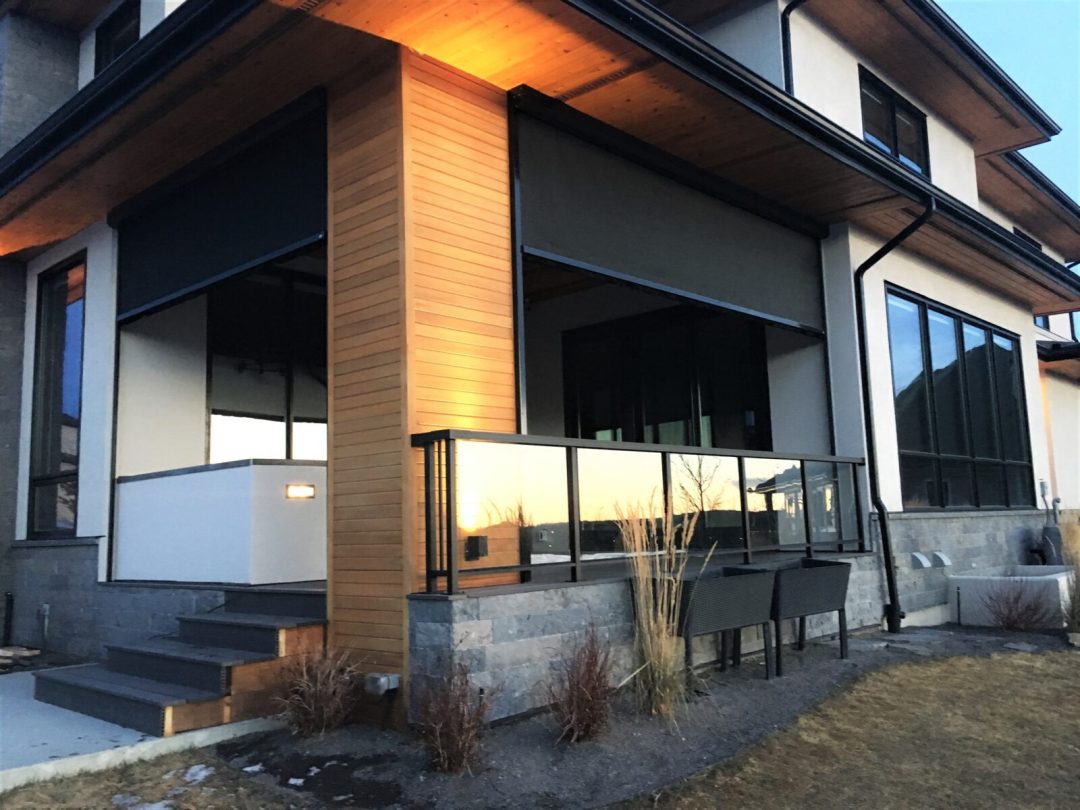

Before buying a patio cover, ask the installer to show you the complete route rainwater and snowmelt will take: off the roof, through the collection system, out of the downspout or post, and across your property. Treat that route as part of the design—not a detail to settle after the roof is installed.
For homeowners in Calgary, Cochrane and nearby communities, fall is a useful time to ask this question. Think beyond keeping the dining table sheltered. Where will water go beside the stairs, along the route to the garage, or near the basement windows?
When comparing patio cover options, make drainage one of your buying criteria alongside shade, appearance and usable space.
Ask to see the whole drainage route
A useful consultation question is: “Can you mark where the water leaves the cover and where it goes next?” Ask for that route on the proposed layout, including the final discharge point rather than only the gutter location.
Calgary’s Guide to Lot Drainage explains that homeowners are responsible for maintaining established drainage patterns and directing water away from buildings and neighbouring properties. That makes the yard beyond the cover part of the conversation.
Ask the installer to identify:
- Where the roof collects and releases water.
- Which downspouts or posts carry it to ground level.
- Whether existing house downspouts need to remain accessible or be altered.
- Where the discharged water is intended to travel.
- Whether any proposed landscaping work needs a separate assessment.
You do not need to design the drainage system yourself. You do need an understandable explanation of what the proposed work includes.
Hidden drainage still needs a visible explanation
Do not judge drainage by whether you can see a conventional downspout in a photograph. For example, Sundance Outdoor Living describes its louvered roof system as using integrated gutters that drain through the posts.
If you are considering a louvered roof, ask which posts will carry water and where their outlets will be. Then compare those locations with your furniture arrangement, steps, garden beds and routes through the yard.
For a fixed cover, ask the same questions about its proposed gutter and downspout arrangement. Avoid assuming that every roof style uses the same collection system.
A tidy appearance is worthwhile, but request a drawing or explanation that makes concealed drainage easy to understand. Also ask how the relevant components will be reached for inspection and cleaning.
Check the walking routes before choosing an outlet
Put your everyday movements on the layout: taking out the bins, reaching the garage, letting the dog into the yard and carrying groceries through the back door. Ask the installer to review drainage alongside those routes.
The City’s Stormwater Bylaw guidance for homeowners says downspouts must end at least two metres from sidewalks, roads, pathways, alleys, lanes or surface drainage facilities. It identifies preventing winter ice formation on sidewalks and lanes as a reason for this separation. Have the proposed outlet checked against the requirements for your property.
Do not automatically apply Calgary’s guidance to an address outside the city. For Cochrane properties, the Town’s flood-preparation guidance advises keeping downspouts clear and directed away from foundations, and checking swales for blockages. Ask your project team to confirm the applicable local requirements.
If your project also includes a new or redesigned deck, request one coordinated layout showing the cover, stairs, landings and drainage outlets.

Make fall maintenance part of the buying decision
Ask what routine care the proposed drainage system needs before you commit to it. Calgary’s roof and eavestrough guidance recommends clearing leaves and debris and directing downspout discharge away from foundations and neighbouring homes towards landscaped areas.
Translate that maintenance need into practical buying questions:
- How are gutters and outlets inspected on this particular model?
- Can a service provider reach them without dismantling other features?
- Are leaf-control accessories available and appropriate for this installation?
- What cleaning remains necessary if those accessories are fitted?
- Who should you contact if water stops following the intended route?
Request the manufacturer’s care instructions for the exact product being quoted, including any cold-weather operating guidance for moving components. Do not rely on instructions for a different roof system.
During your fall consultation, point out nearby trees and show where leaves usually collect. Photographs taken safely from ground level are enough to start that discussion; leave roof access and technical inspection to the appropriate professional.
Separate the new cover from existing drainage problems
Tell the installer about puddles, overflowing house gutters or troublesome icy spots you already notice. Bring photographs from previous rain or thaw events if you have them.
Ask whether the patio cover proposal addresses those concerns or simply provides drainage for the new roof. If additional assessment is needed, establish who will arrange it before approving the scope.
Keep permit responsibilities clear too. Calgary’s deck permit guidance lists building a covered deck among the situations requiring a building permit. Confirm the approval requirements for your actual project and municipality rather than assuming an existing deck settles the question.
What should the quote say about drainage?
Request enough detail to distinguish included work from unresolved decisions. Useful items include the collection system, outlet locations, changes to existing downspouts, access for maintenance and responsibility for any associated landscape repairs.
If site drainage work is outside the patio cover contract, ask for that exclusion to be explicit. Compare proposals on their complete scope, not just the roof material and dimensions.
The final question is simple: “When this project is finished, can you explain where the water goes and what I need to maintain?”
Plan the shelter and the drainage together
Bring Blueflower Sunrooms photographs of your backyard, existing downspouts, stairs and any recurring wet spots. Tell us which routes through the yard must remain convenient to use.
Request a patio cover consultation to discuss your Calgary, Cochrane or nearby-area property, with drainage included in the planning conversation from the start.