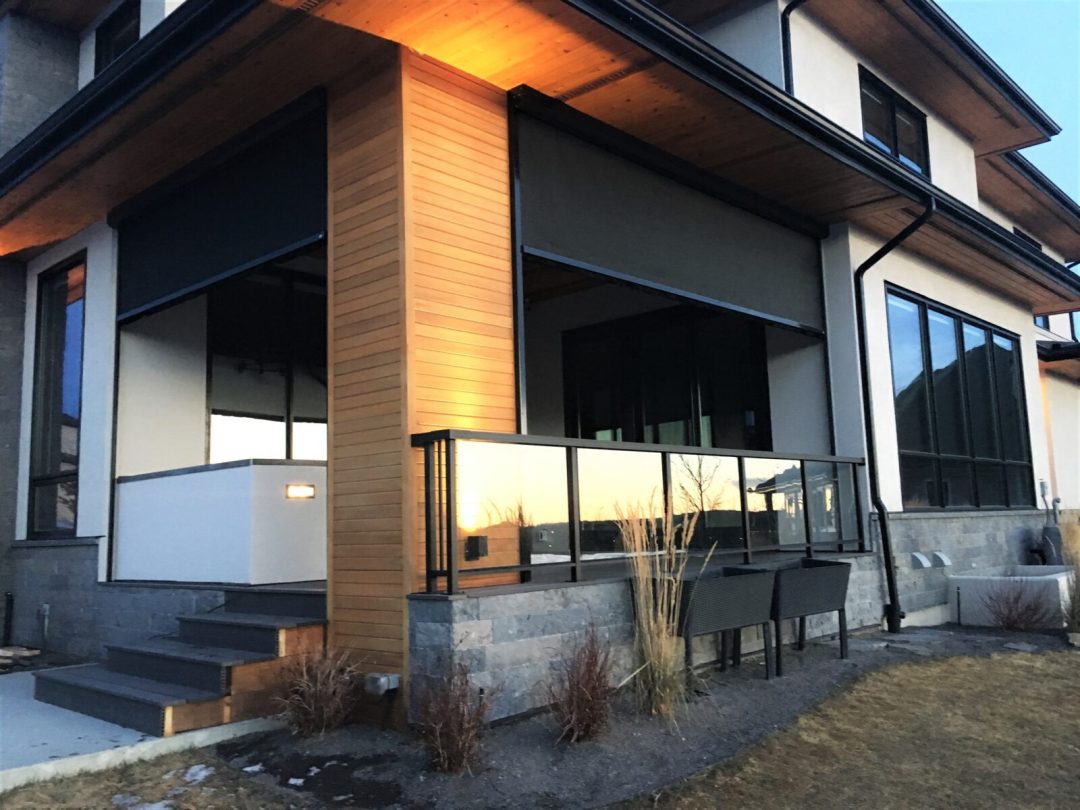

Best overall for an unheated sunroom on a suitable slab: porcelain tile installed as part of a freeze-thaw-appropriate floor assembly. Best for a heated, enclosed room: temperature-rated luxury vinyl. Best for an existing sound slab: sealed concrete. The right sunroom flooring depends on whether the room stays conditioned, what supports the floor, and how much water reaches it.
- Porcelain tile is the best sunroom flooring for a suitable unheated slab when the full installation can handle freeze-thaw exposure.
- Temperature-rated luxury vinyl suits a heated, enclosed sunroom if its installation requirements match the room.
- Sealed concrete keeps an existing sound slab visible; composite decking suits a ventilated platform, not a slab.
- Blueflower Sunrooms is best for homeowners planning a custom sunroom before choosing its floor finish.
Why this matters for Alberta homes
A Calgary sunroom can feel warm in direct sun and cold after sunset. Snow tracked through the door adds water; a room that is unheated can also drop below 0°C. A finish that looks right in a conditioned living room is not automatically suitable for that cycle.
The distinction between a 3-season and a 4-season room matters more than the flooring sample in your hand. Blueflower Sunrooms designs custom rooms for homeowners in Calgary, Cochrane, Airdrie and Southern Alberta. Settle how you intend to use the room, then select a floor and installation method that fit its actual conditions.
For a 2026 project, start with three questions: Will the room be heated throughout winter? Is the floor a concrete slab or a raised platform? Can rain, snow or meltwater reach the surface? Those answers narrow the choices before colour or texture enters the discussion.
What makes the best sunroom flooring
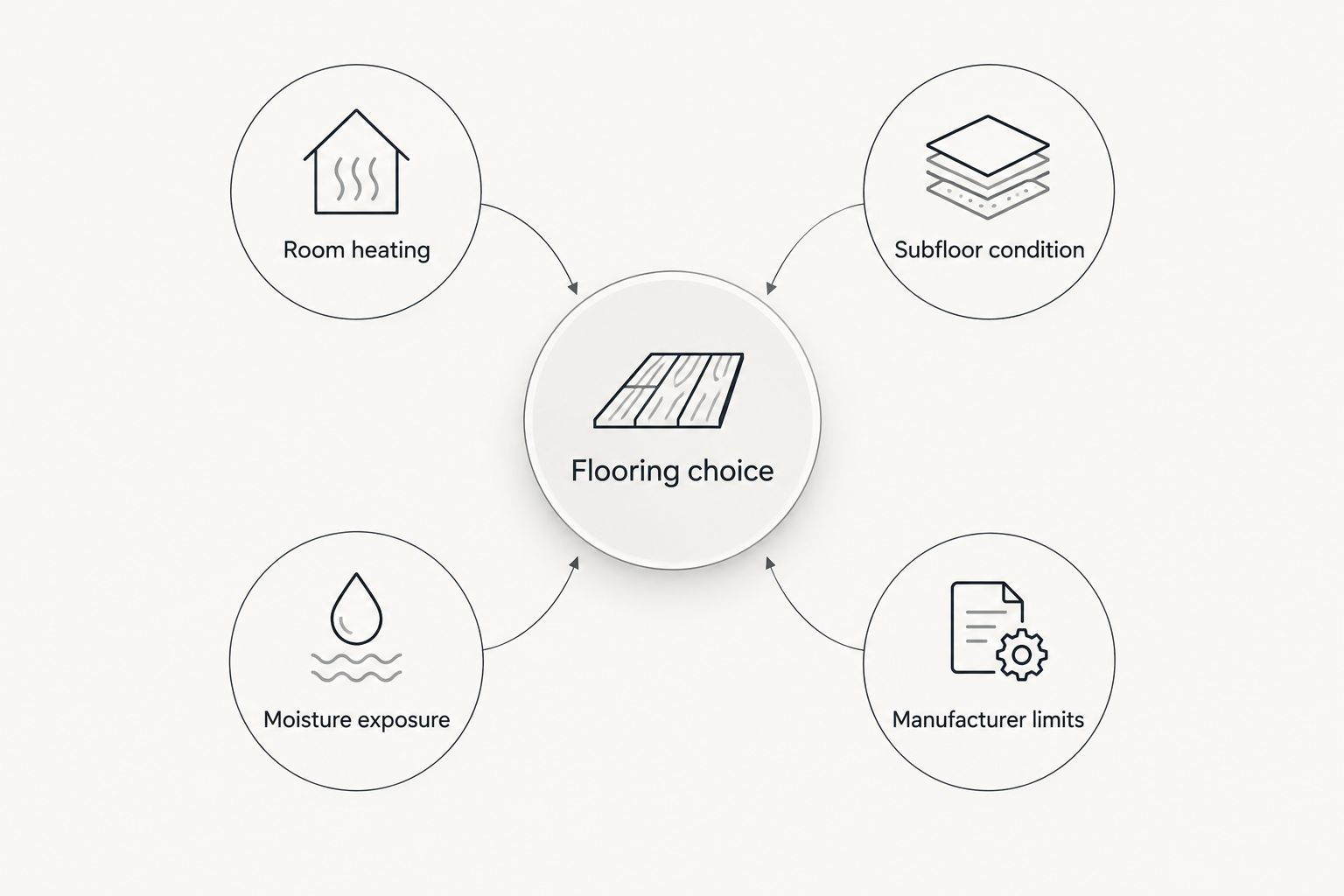
Judge each option against these criteria before you rank finishes by appearance:
- Room heating: An enclosed, consistently conditioned room has different flooring requirements from an unheated space. Do not treat a 3-season room as a heated living room without confirming how it will operate.
- Subfloor condition: Tile, concrete coatings, vinyl and deck boards need different supporting surfaces. An existing slab, a new slab and a ventilated platform are not interchangeable starting points.
- Moisture exposure: Consider tracked-in snow, wet footwear, door thresholds and any opening that admits rain. A water-resistant surface does not make the assembly beneath it moisture-proof.
- Manufacturer limits: Check the chosen finish and installation materials against the temperatures, sunlight and moisture the room will experience. The product and the method both have to qualify.
- Surface feel: Tile and concrete feel different underfoot from vinyl or wood. Decide whether comfort calls for a different finish or a change to the room design.
The best floor is the one that suits the room beneath and around it, not just the surface you see. In 2026, ask about the entire floor assembly before approving a finish: substrate, preparation, installation materials, movement allowances and the finished threshold.
Sunroom flooring options at a glance
The rankings below separate floor finishes by the conditions where each makes sense. Do not move a recommendation from a heated room to an unheated one without checking its specifications.
| Flooring | Best for | Standout feature | Key limitation |
|---|---|---|---|
| Porcelain tile | Suitable unheated slab | Hard surface that can form part of a freeze-thaw-appropriate assembly | The full assembly and slab must be suitable |
| Sealed concrete | Existing sound slab | Uses the slab as the visible finish | Does not fix slab moisture or cracks |
| Temperature-rated luxury vinyl | Heated, enclosed room | Softer feel underfoot than tile | Temperature and sunlight limits vary by product |
| Composite decking | Ventilated raised platform | Suits a deck-style room floor | Not a substitute for slab flooring |
| Engineered wood | Conditioned room with a controlled interior feel | Wood appearance | Sensitive to moisture and environmental changes |
1. Porcelain tile: best sunroom flooring for a suitable unheated slab
Porcelain tile takes the top spot when an unheated, enclosed sunroom sits on a slab that can support a properly specified installation. The tile is only one component. Substrate preparation, setting materials, grout, movement accommodation and exposure at the doorway all affect whether the floor belongs in a room that can freeze.
Porcelain tile pros:
- A hard, cleanable surface suits wet footwear and tracked-in snow.
- It gives you a finished floor without relying on a wood-look product in an unheated room.
- Tile choices let you match the floor to the adjoining space without assuming the rooms share identical conditions.
Porcelain tile cons:
- A tile label alone does not establish that the complete installation suits freeze-thaw exposure.
- The surface feels cold when the room is cold.
- An unsuitable or moving slab can compromise the finished floor.
Best for: A homeowner with a suitable slab who wants a hard surface in a sunroom that will not stay heated all winter. Verdict: Buy, but approve the installation specification before choosing the tile colour.
For a 2026 build, ask the installer to explain how the proposed assembly addresses the slab, temperature changes and moisture at entrances. That conversation is more useful than comparing tile samples in isolation. If the supporting floor is a raised deck rather than a slab, assess that structure before carrying this recommendation across.
2. Sealed concrete: best for an existing sound slab
If the sunroom already has a sound concrete slab, using it as the visible floor can avoid adding another finish over it. The result depends on the slab you actually have: its surface, cracks, moisture condition and edges remain part of the finished room. A sealer changes the surface; it does not repair what lies below.
Sealed concrete pros:
- Keeps the floor assembly relatively simple when the slab is suitable.
- Gives wet footwear a hard surface rather than a moisture-sensitive finish.
- Lets you assess the existing substrate directly instead of covering it first.
Sealed concrete cons:
- Visible cracks and surface variation remain part of the appearance unless addressed.
- Sealing is not a cure for moisture moving through a slab.
- Concrete feels cold underfoot in an unheated room.
Best for: A homeowner who already has a sound slab and accepts concrete's look and feel. Verdict: Buy only after the slab's condition and the chosen surface treatment are checked.
In 2026, do not assume a slab is suitable simply because it looks dry on a sunny day. Ask what preparation the finish requires and how the room's door thresholds will handle water. If the slab needs substantial correction, reassess the floor plan rather than treating a surface coating as a structural fix.
3. Temperature-rated luxury vinyl: best for a heated, enclosed room
Luxury vinyl can give a heated sunroom a less cold-feeling surface than tile or exposed concrete. The deciding issue is not whether a product is called waterproof. It is whether the specific flooring and its installation method are approved for the room's operating temperatures, sunlight and subfloor conditions.
Luxury vinyl pros:
- Provides a different underfoot feel from hard tile or concrete.
- Offers a finished-floor option when the room is genuinely conditioned.
- Lets you compare appearance and surface texture without changing the sunroom structure.
Luxury vinyl cons:
- Product limits differ; an unheated winter room can fall outside the approved installation conditions.
- Direct sunlight and temperature swings require attention to the selected product's instructions.
- A water-resistant plank does not correct moisture problems in the subfloor.
Best for: A homeowner planning an enclosed, consistently heated sunroom who wants a floor that feels less cold underfoot. Verdict: Buy after checking the exact product specifications against the finished room.
For a 2026 project, confirm how the sunroom will be heated before selecting vinyl. Then check the flooring's stated temperature range, sunlight guidance and subfloor requirements with the supplier and installer. If the room will regularly be left unheated, move porcelain or suitable exposed concrete higher on the list instead of assuming the vinyl will tolerate it.
4. Composite decking: best for a ventilated raised platform
Composite deck boards belong in this ranking because some sunroom and screen-room plans begin with a raised, deck-style floor rather than a slab. They are a different type of surface from an interior plank floor. Their suitability depends on the platform, drainage, board installation requirements and the way the room will be enclosed.
Composite decking pros:
- Matches a raised platform concept better than trying to install slab flooring on a deck.
- Provides a practical surface to consider where the floor is exposed to outdoor conditions.
- Allows the platform design to account for drainage rather than hiding it beneath an interior finish.
Composite decking cons:
- Board spacing and a deck-style appearance will not suit every enclosed-room plan.
- A ventilated platform does not perform like a finished, insulated interior floor.
- The structure and fastening details still need to match the selected boards.
Best for: A homeowner planning a screen room or deck-style sunroom on a suitable raised platform. Verdict: Buy for that floor type; skip it when the goal is the continuous interior feel of a heated 4-season room.
For a 2026 design, decide early whether you want a deck-style platform or an interior-style floor. That choice affects the room's edge details, doorway and intended winter use. Choosing boards after the enclosure is designed can leave you trying to make a floor act like something it was not built to be.
5. Engineered wood: best for a conditioned, dry interior feel
Engineered wood belongs on the shortlist when the sunroom will function as a conditioned interior space and you want a wood floor. It is not the default for a room that freezes, admits rain or sees repeated wet footwear. The exact product's environmental and installation requirements decide whether it belongs in your plan.
Engineered wood pros:
- Gives a conditioned sunroom a wood surface rather than a tile or concrete finish.
- Can make the room feel visually connected to adjoining interior space.
- Offers another option when the room's heating and moisture control are already resolved.
Engineered wood cons:
- Wet footwear and moisture need more attention than they do with a hard mineral surface.
- Temperature and humidity changes can limit which products and installation methods qualify.
- It is a poor shortcut for making an intermittently heated room feel like an interior one.
Best for: A homeowner designing a consistently conditioned sunroom and prepared to follow a specific wood product's requirements. Verdict: Hold until the room's heating, moisture exposure and subfloor details are settled.
If your first priority is using the room through an Alberta winter, settle the enclosure and heating plan before choosing a wood appearance. If those plans change, revisit the flooring choice. A finish approved for a dry, conditioned room should not be carried into a 3-season plan by default.
How these floors were ranked
The order gives priority to winter exposure, then the supporting floor, moisture and day-to-day comfort. Porcelain leads for a suitable unheated slab because its recommendation addresses the room's cold and wet conditions without treating it as conditioned space. Sealed concrete follows where a sound slab already exists; vinyl moves ahead when the room stays heated. Composite decking and engineered wood serve narrower floor and room types, so neither is a universal substitute for tile.
No finish earns its place from appearance alone. For Blueflower Sunrooms, the useful starting point is the custom room design: whether the project is a 3-season sunroom, a 4-season sunroom or a screen room changes the floor you should specify. This is a decision guide, not a claim that every listed finish fits every build.
Which sunroom flooring should you choose?
Choose porcelain tile as the default for a suitable unheated slab, provided the entire installation is specified for the exposure. Keep a sound slab visible with sealed concrete if you like that finish. Choose temperature-rated luxury vinyl for a consistently heated, enclosed room; reserve composite boards for a suitable raised platform and engineered wood for a controlled interior setting.
Before requesting a personalized 2026 quote, tell Blueflower Sunrooms how you want to use the room in winter and what floor structure you have or plan to build. That gives the room design and flooring choice a shared starting point. A floor decision made without those details is a sample choice, not a project specification.
FAQ
What is the best sunroom flooring for an Alberta winter?
Porcelain tile is the best starting point for an unheated sunroom on a suitable slab when the complete installation is specified for freeze-thaw exposure. A heated room or raised platform calls for a different assessment.
Can you put luxury vinyl flooring in a 3-season sunroom?
Use luxury vinyl in a 3-season sunroom only if the specific product and installation method are approved for its temperature, sunlight and subfloor conditions. Do not assume a water-resistant label covers an unheated Alberta winter.
Is porcelain tile better than sealed concrete for a sunroom?
Porcelain tile offers a separate finished surface; sealed concrete leaves a suitable slab visible. The better choice depends on slab condition, the required installation assembly and how you want the floor to feel.
Does a sunroom floor need to withstand freezing temperatures?
An unheated sunroom floor needs materials and installation methods suited to the temperatures it actually reaches. A room that stays conditioned throughout winter has a different set of flooring options.
Can composite decking be used inside a sunroom?
Composite decking can suit a sunroom or screen-room plan built around a compatible raised, ventilated platform. It is not a direct replacement for flooring specified over a concrete slab.
Is engineered wood suitable for a 4-season sunroom?
Engineered wood can suit a consistently conditioned 4-season sunroom if the selected product’s environmental and subfloor requirements are met. Confirm moisture exposure at doors before choosing it.
What affects the cost of sunroom flooring?
The floor structure, substrate preparation, finish and installation method affect the scope of a sunroom flooring project. Request a personalized quote based on the room design and the condition of its supporting floor.
One last thing
A sample can tell you whether you like a floor's appearance; it cannot tell you whether the supporting floor and room are ready for it. In 2026, make room type and subfloor the first two lines of your flooring brief. The finish comes next.